
Core Productsproduct
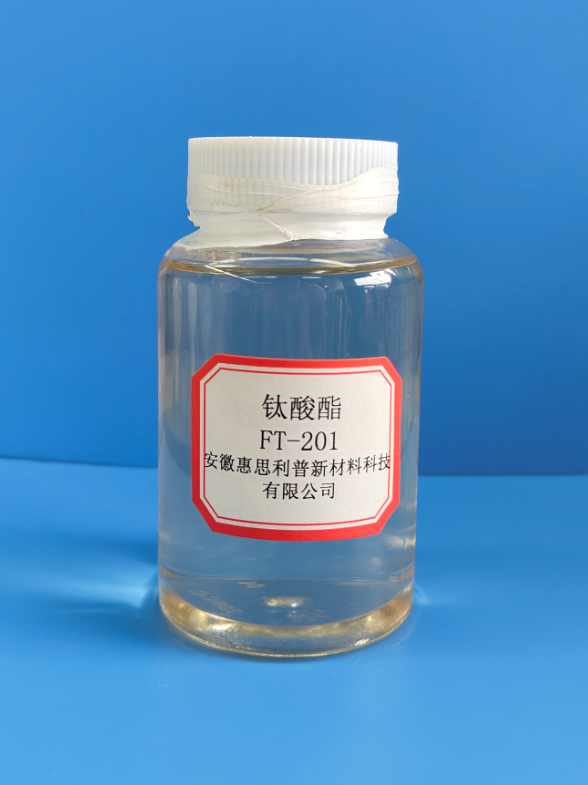
Summary: Isopropyl tri(dioctyl pyrophosphato) titanate
 Model: Titanate Coupling Agent 201Published: 2026-08-12Views: 28
Details
Product overview
International equivalent: Kenrich KR-38S (USA)
Domestic standard grade: Nanjing classic 201
Chemical name: isopropyl tri(dioctyl pyrophosphato) titanate
Structure: pyrophosphate-type titanate coupling agent
Physical and chemical index
Appearance
0.96~1.00g/cm³
3000~6000mPa·s
210℃
All-round core performance
Strong coordination chelate structure; firm, non-desorbing coating
Coupling + dispersion + viscosity reduction + flame retardancy in one
Universal compatibility, high water resistance and stability
Process-friendly; no change to existing production lines
Suitable for light / white products without affecting hue
Full-industry, all-scenario applications
Plastic modification and products industry
Coatings and paints industry
Rubber products industry
Composites and FRP industry
Adhesives, sealants and inks industry
Inorganic powder activation industry
Standard application process
Dry powder modification process
Direct blending process
Wet grinding process (for coatings, inks and adhesives)
FRP / composite impregnation process
Precautions, packaging and storage
1. Packaging and storage:
IBC or 25 kg / 200 kg packaging
Store sealed at room temperature in a cool, dry, ventilated place away from light and heat; shelf life 6 months
2. Precautions:
A chelate-coordinated pyrophosphate titanate with stable performance and strong water resistance for most industrial systems.
Reseal promptly after opening; avoid moisture pickup and prolonged exposure to air.
Compatible with conventional dispersants, lubricants, plasticizers, flame retardants and curing agents; no major formulation changes are needed.
Trial runs are advised for strongly alkaline systems; neutral or weakly acidic systems can be used directly.
Product Inquiry

025-58771286

17701584349@163.com

Hanxi Road, Tongcheng Industrial Park, Tianchang, Chuzhou, Anhui Province, China
Follow us

Product Range
News
Copyright


 025-58771286
